01 / GROUND
What the market sees
Acreage measured by yield, frontage, or zoning — priced against commodity cycles and comparable sales.
INFRASTRUCTURE. LAND. POWER.
POWERD LAND develops infrastructure-ready sites where energy, land, and connectivity come together to power the next generation of industry.
OUR MISSION
We combine energy intelligence, land strategy, utility coordination, and development execution to advance sites for compute and power-intensive industry.
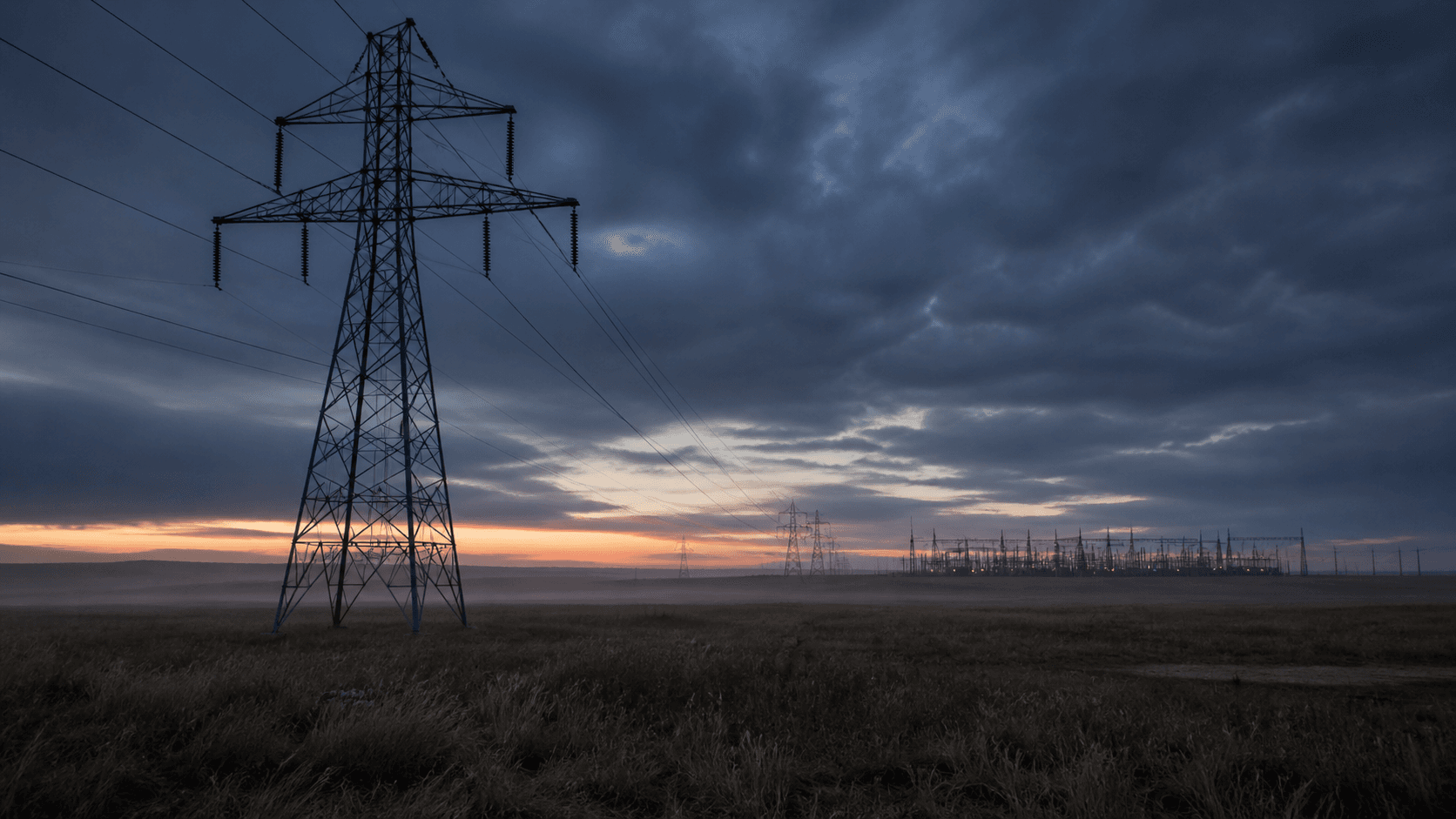
THE POWER PATH STARTS WITH THE GRID.
WE REIMAGINE LAND
Finding homes for megawatts means reading ground the way the grid reads it — and advancing land the market overlooked into infrastructure the next generation of industry depends on.
Acreage measured by yield, frontage, or zoning — priced against commodity cycles and comparable sales.
The same parcel through the grid: transmission proximity, substation capacity, fiber routes, water, rail, and the real cost of reaching each one.
A qualified, development-ready site that can carry compute and power-intensive industry for decades — valued by what it enables, not what it yields.
WHY IT MATTERS
When land becomes infrastructure, its value stops tracking commodity cycles and starts tracking the digital economy — for the owner who holds it, and for the county it sits in.
WHO WE WORK WITH
LANDOWNERS
Ground that reads as ordinary acreage can sit on the scarcest input in the digital economy. We evaluate what a property can carry — transmission, capacity, connectivity — and what that makes it worth as infrastructure rather than as farmland or frontage.
CAPITAL PARTNERS
Partner with POWERD LAND to identify, qualify, control, and advance development opportunities before they become fully priced by the broader market.
UTILITIES & INFRASTRUCTURE PARTNERS
We work with utilities, economic-development organizations, energy providers, and infrastructure partners to match future load with credible development locations.
HOW POWERD CREATES VALUE
A disciplined sequence designed to resolve the risks that matter before capital is committed.
ORIGINATION → QUALIFICATION → EXECUTION
Identify substations, transmission, generation, storage activity, utility investment, and other energy infrastructure signals.
Map ownership, acreage, zoning, access, environmental constraints, fiber, water, and development conditions.
Engage utilities and infrastructure partners to understand potential MW, required upgrades, commercial structure, and time-to-power.
Secure appropriate land control only after the opportunity clears critical development gates.
Create institutional development packages for end users, utilities, capital partners, and infrastructure developers.
DEVELOPMENT STRATEGIES
Each strategy is shaped around the infrastructure pathway—not a one-size-fits-all land thesis.
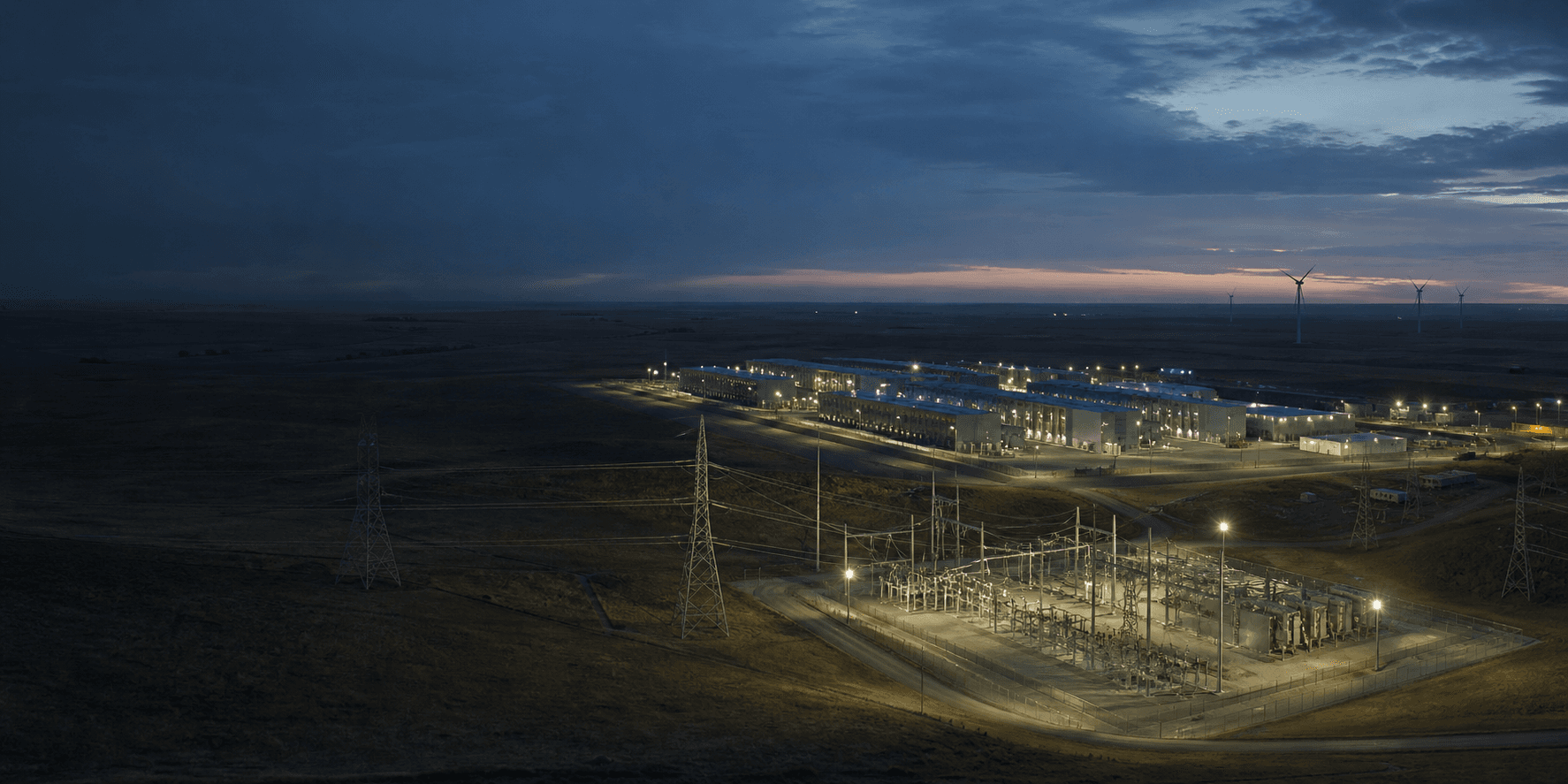
UTILITY-SERVED INFRASTRUCTURE SITES
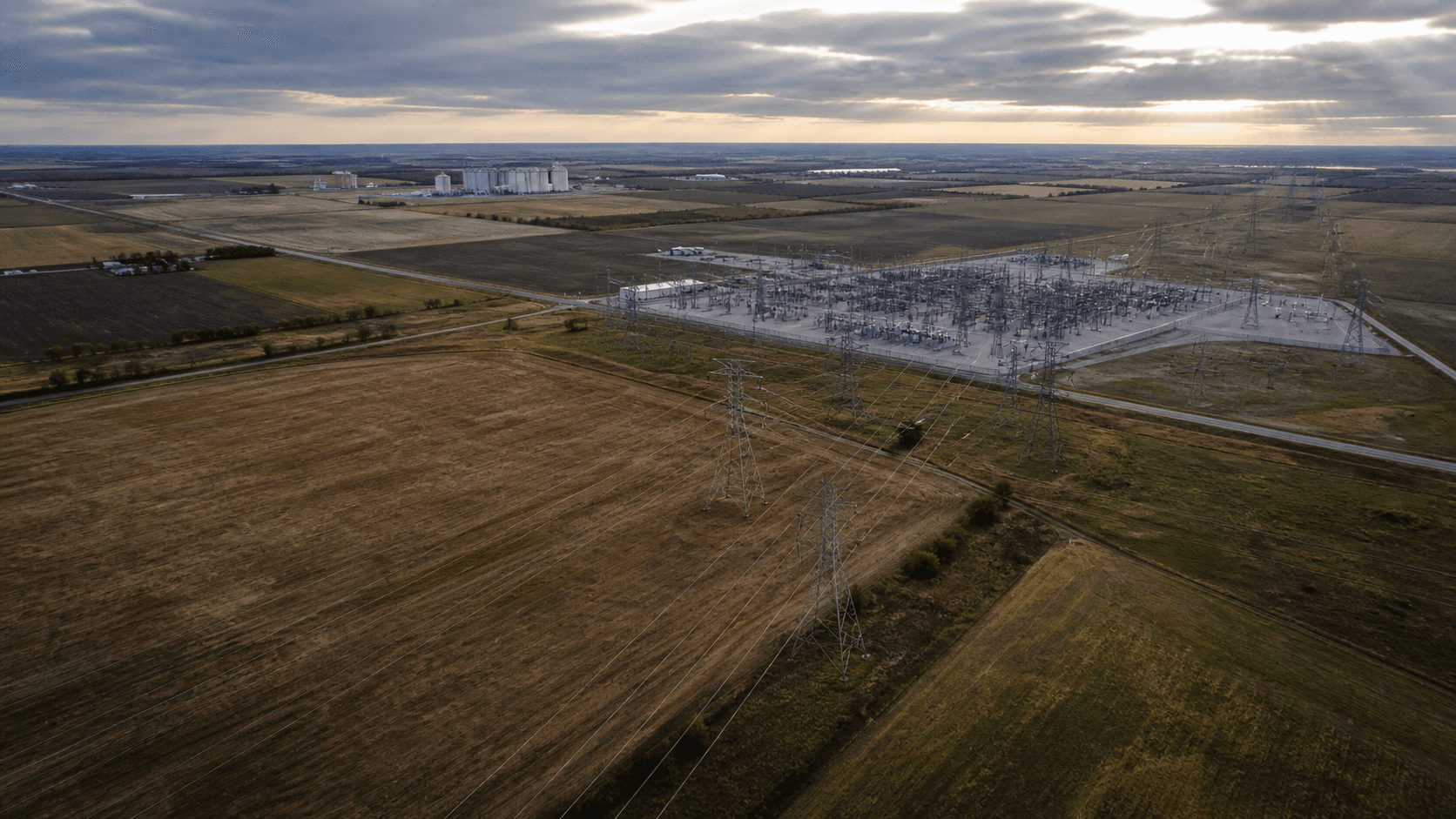
ENERGY-NODE OPPORTUNITIES
GRID + ONSITE POWER
RENEWABLE-ADVANTAGED DEVELOPMENT
Large-scale energy and compute campuses integrating land, grid, generation, storage, and connectivity.
ACTIVE DEVELOPMENT PROGRAM
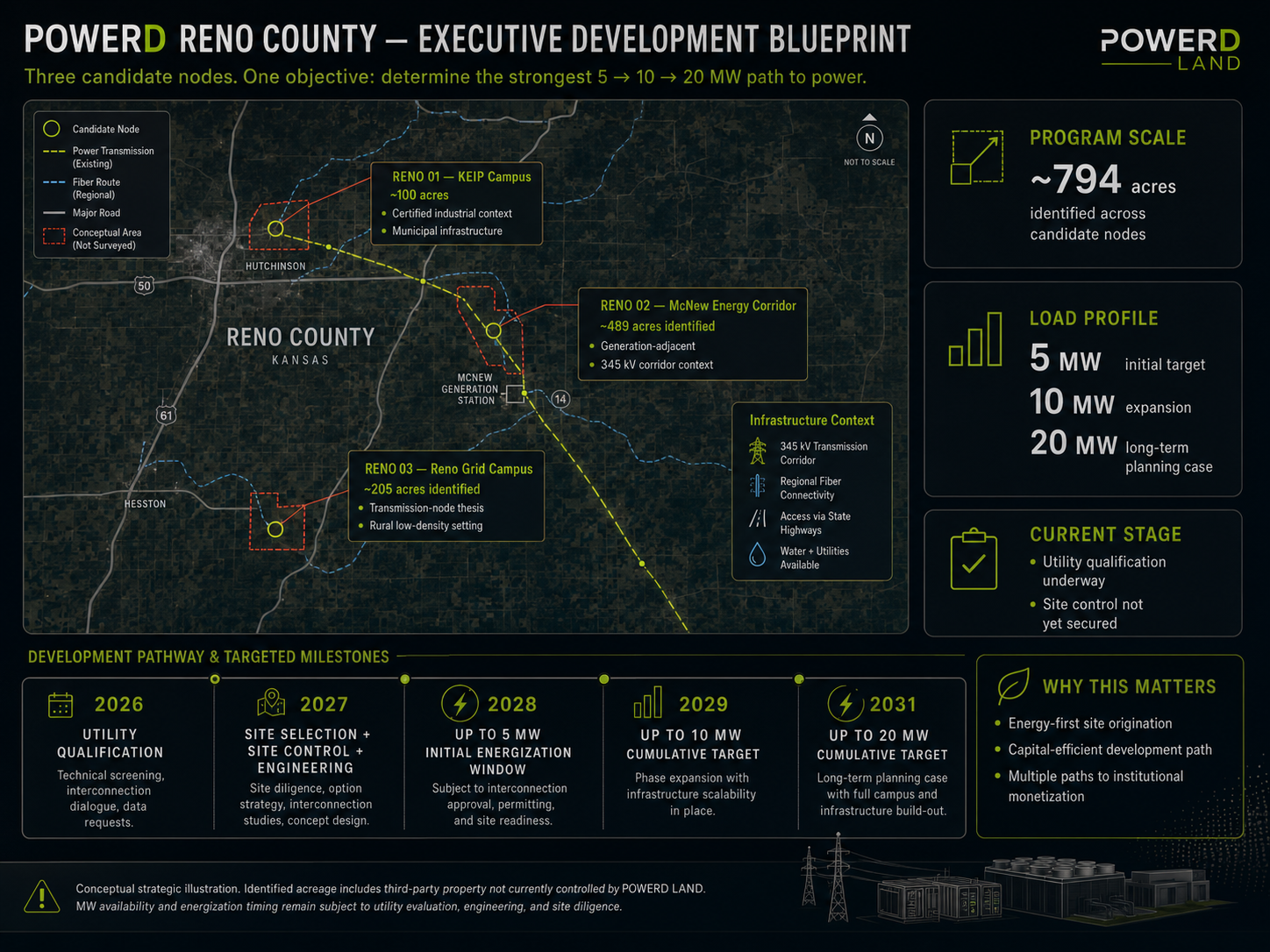
A multi-node development program evaluating phased 5 → 10 → 20 MW pathways in Reno County, Kansas.
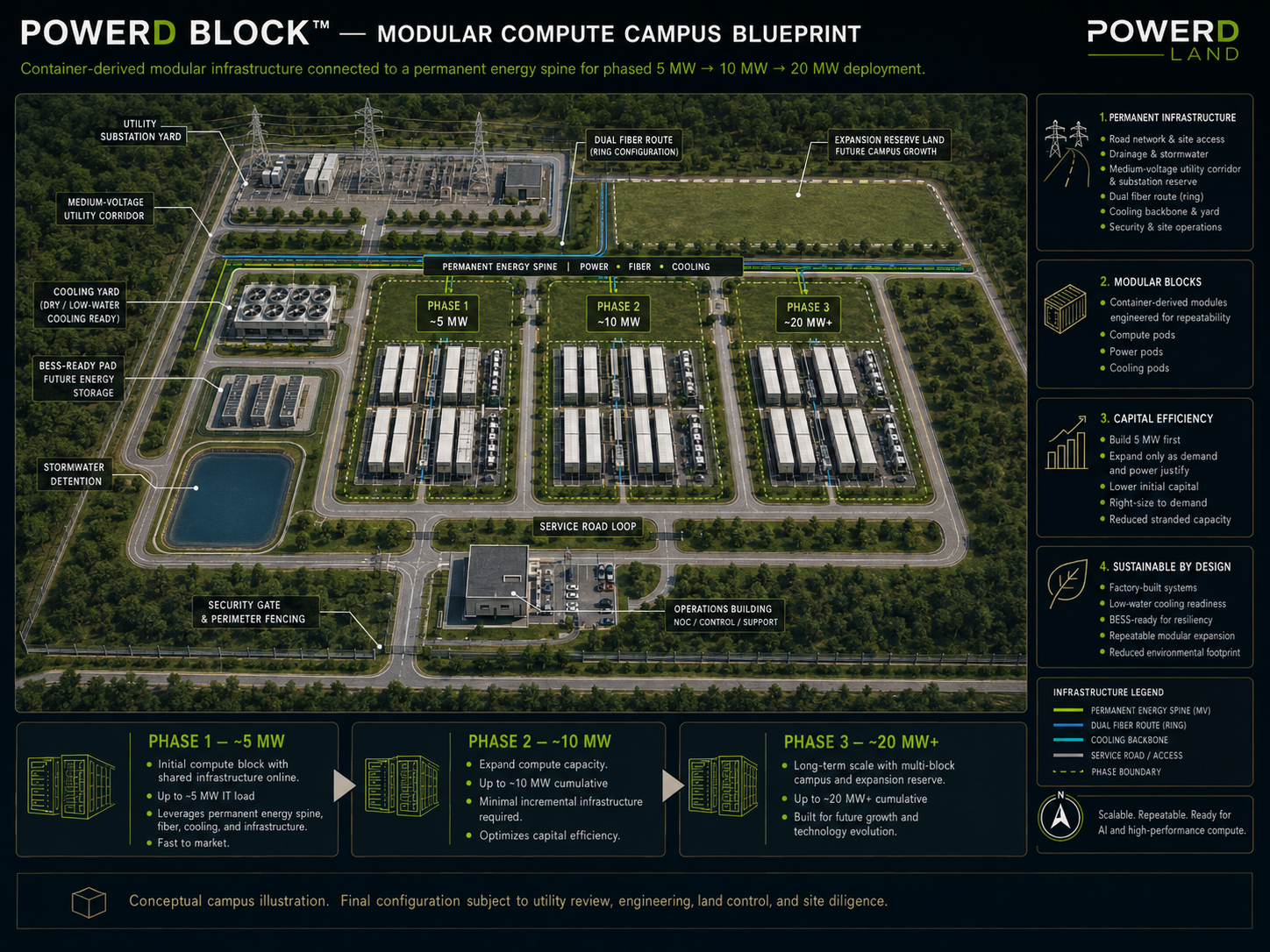
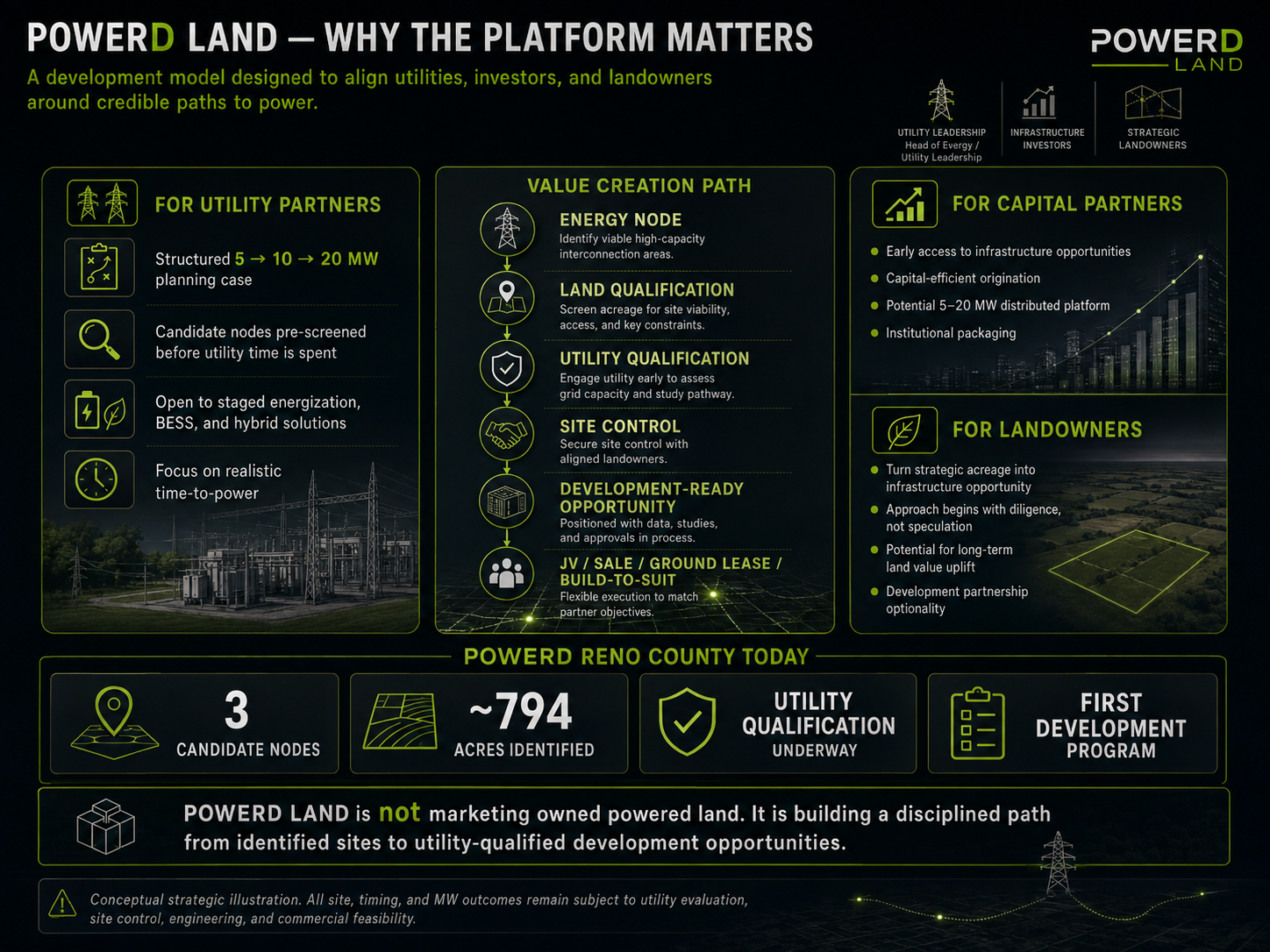
PROGRAM BLUEPRINTS
The development thesis in three views — the program, the build, and the model behind both.
Conceptual strategic illustrations. Identified acreage includes third-party property not currently controlled by POWERD LAND. Site, timing, and MW outcomes remain subject to utility evaluation, site control, engineering, and commercial feasibility.
WHY POWERD
We read the grid before the map. Power capability is what qualifies an acre.
We avoid speculative land acquisition before key utility and infrastructure risks are understood.
Grid, storage, renewable, and hybrid strategies allow us to evaluate more than one route to usable MW.
We convert raw opportunity into a development story utilities, developers, and capital partners can evaluate.
BUILD WITH POWERD LAND
POWERD LAND is building a development platform around one of the defining infrastructure constraints of the next decade: where large-scale power can actually be deployed.
For landowners, infrastructure investors, utilities, developers, and energy partners.